Tag Archives: Watchman Nee

(The Everlasting Way) Crucified with Christ – A Life of Surrender

Have you ever struggled with intending to do something important but never getting to it because it required too much effort. Or, knowing you shouldn’t do this or that, but finding yourself doing it anyway.

I do.

These are signs we’re not fully embracing what it means to be crucified with Christ in His death and made alive with Him in His resurrection. 

But how can we understand what this really means?

I’ve found answers in The Normal Christian Life by Watchman Nee. [1] 
This classic clearly articulates, from scripture, the normal life a Christian is to live:

  • Knowing our crucifixion with Christ on the cross and how our death frees us from sin [2]
  • Considering (or reckoning) the truth of our death to sin and life in Christ on a regular basis [3] 
  • Presenting the members of our body, not as instruments of unrighteousness, but to God for righteousness [4]

Upon this knowing, considering, and presenting, we live out the following verse, which is a great summary of the gospel:

Galatians 2:20 – I have been crucified with Christ, and it is no longer I who live, but Christ lives in me. That life which I now live in the flesh, I live by faith in the Son of God, who loved me and gave himself up for me. 

This verse states that we died, we’re indwelt with the Holy Spirit, and our life is about depending on Christ, not on our own striving.

I am the vine. You are the branches. He who remains in me and I in him bears much fruit, for apart from me you can do nothing (John 15:5).

But how is this possible?

How can we who are living and breathing live a life of death to self?

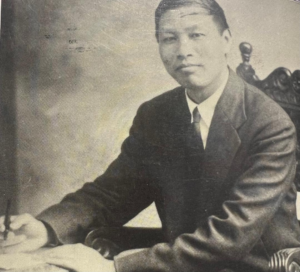
In his book, Watchman Nee speaks often of his mentor in the faith, Miss Margaret Emma Barber (1866-1930), a British missionary to China. She helped show Mr. Nee and other new believers in China the power of resting in Christ and not living a life of self-motivated activity.

Of Miss Barber, Watchman Nee wrote: “She had but one motive, one desire, and that was for God. Written in the front of her Bible were these words: ‘Lord, I want nothing for myself.’ Yes, she lived for God alone, and where that is the case, you will find that such a one is bathed in light, and that light illuminates others. That is real witness.” [5]

“Lord, I want nothing for myself” – seems to be a significant starting point for understanding the type of surrender required to reckon myself dead to sin, but alive to Christ.

 Likewise you also, reckon yourselves to be dead indeed to sin, but alive to God in Christ Jesus our Lord. (Romans 6:11 NKJV).

Let’s look at each phrase of M.E. Barber’s life’s cry.

Lord

“Lord” – seems to be the most important word of all. Here she recognized God’s nearness and directed her attention to Him.

Godward attention. Recently I had a discussion with friends as to all that’s involved in paying attention. When I spend my resource of attention, I’m paying with my thoughts, my time, my focus, my eyes, and my ears. Attention costs us dearly. Being attentive to God seems to be the one thing which becomes the mainspring of all else in life.

I

“I” In a world of selfies and social media, “I” must be surrendered to Christ in ever-increasing veracity. 

He must increase, but I must decrease (John 3:30).

For you died, and your life is hidden with Christ in God (Colossians 3:3).

Want

What do I want? Comfort? Peaceful circumstances? Popularity? Success? Security?

Yes, to all and more, I’m sure.

These “wants” are ever swirling around in my thoughts and distracting my soul. What my heart longs for is the freedom of Godward attention alone, apart from what I want.

Nothing

“Nothing” (“not one” + “thing”)

So, personally, to apply M.E. Barber’s statement, I would surrender:

  • comfort
  • peaceful circumstances
  • caring about what people think
  • the need to succeed
  • riches and worldly security
  • . . .

These seem more like cares to be given freely to God.

Humble yourselves therefore under the mighty hand of God, that he may exalt you in due time, casting all your worries on him, because he cares for you (I Peter 5:6-7).

For

“For” (“to support,” “on behalf of”).

I want not one thing to support me or to be for my behalf.

As long as I live, I will have wants or needs; I must trust them all to the One who loved me and gave Himself up for me. [6]

Myself

“Myself” (“my own person”)

The last phrase really helps me get the gist of what M.E. Barber meant and what I’d love to be the posture of my heart. 

Not wanting anything for myself, but all for Christ.

The many things the Lord has asked me to manage:

  • time
  •  health
  • possessions
  •  talents
  •  vocation
  •  my very self

are all His anyway. Why would I not want to surrender them back to Him for His kingdom’s work?

Prayer 

Father, I come to You in full awareness of Your nearness and my great need for You.

I long to have a heart like Margaret Barber, whose focused desire was to live out her crucifixion in Christ in full surrender of everything to You.

Lord, I surrender all that You have entrusted to me, not for myself, but back to You to be used for the advancement of Your Kingdom. 

Being free of the trappings that bog down my soul, may I ferociously love every person You bring my way.

May I boldly proclaim the wonderful news of the precious blood of Jesus, shed for our redemption, our rescue from death to life.

 Amen.

Reflections

Lord, I want nothing for myself.

Yet God has entrusted me with much.

My response is to get to the point each day where I can truly say.

Lord, of all you’ve asked me to manage, I don’t want it for myself; I want it for You to be used as You will.

I want to surrender it all.

Thinking as a man who has died to what I want, that I might be alive to what God wants.

May this be the cry of my heart every day.

In this way, I believe I will make strides towards living the crucified life.

As I forget my death in Christ along the way and revert to living for what I want, I pray God will quickly show me that I might consider myself dead to sin and alive to God.

Quote

“Our old history ends with the cross; our new history begins with the resurrection.” Watchman Nee.

[1] The Normal Christian Life, by Watchman Nee, Tyndale House Publishers, @ 1977

[2] Romans 6:5-7

[3] Romans 6:10-11

[4] Romans 6:13

[5] The Normal Christian Life, by Watchman Nee, Tyndale House Publishers, @ 1977 pages 240-241

[6] Galatians 2:20

Note: Unless otherwise noted, all referenced Scripture is from the World English Bible (WEB), which is in the public domain.

Also, the cover photo is from the cover of M.E. Barber, A Seed Sown in China, by James Reetzke, Chicago Bibles and Books, @2005

Other posts in our Everlasting Way Series:

Learning How to Overcome Emotional Numbness

Embracing God’s Amazing Love

Are we More Like Batman or Spider-Man

Transforming Awareness: The Power of God’s Love

Minding Your Busyness

Our Deepest Longings Filled

Rules Don’t Rule

Mice in the Sock Drawer

Turning Gainers into Drainers

Until the Darkness Fades

Courage Rising

Recovering

Celebrating with Joy – In Memory of a Friend

Joy in the Journey is about the gladness of God’s nearness in the midst of life’s adventures.

Subscribe to get email notifications of new posts. We post a few times a month. Thank you for reading. 


Rob Buck

Nonfiction books by the Author:

This collection of devotionals chronicles a heartfelt journey from a life of striving and self-reliance to one of growing surrender and trust in God.

Through personal stories of family struggles, cancer, grief, and unexpected trials, the devotions show that true, unshakeable joy comes not from perfect circumstances, but from the constant, loving presence of Jesus Christ.

It’s an invitation to learn to let go of our burdens and find growing peace in God’s greater story.

Finding Joy in Life’s Moments

Because joy is rooted in God and is eternal, it doesn’t ebb and flow with the waves of circumstances. In fact, as we grow in our understanding of joy, we can even experience it more acutely when life is hard. Why? Because God uses trials to conform us into the image of Christ. With this awareness, which gives us glimpses of God’s greater purposes, we rejoice because of His masterful work to free us from needing anything but Him.

For these reasons, and many others, joy in the Lord is commanded in scripture. It’s not just a good idea, it’s vital to our journey as human beings. Rhythms of Joy

Novels by the Author:

What happens when a professor figures out how to send messages to his younger self to try and avoid the suicide of his best friend? Did he change more than he bargained for?  Beyond Time

By finding two undelivered letters in an old shack deep in the woods, Cassie and Daniel unknowingly set off a series of events which uncovers a plot to wipe out a whole family. Hope Remains

Please Check out the  Cola City Podcast . Discussions that impact the vision of reaching every man, woman, and child in a city.

Rhythms: IN (Developing a Love First Mentality)

Watchmen Nee wrote that his mentor, Margaret Barber, cared more about life than work. She focused on loving the people God brought her way rather than the work she needed to get done.

What a beautiful focus. This is my desire as well, but too often loving people gets lost behind the pressure to get things done.

Story

A while ago, I needed to get the name of diabetic test strips which would be covered under our new insurance plan. My pharmacy told me to call my doctor. My doctor told me to call my insurance company. My insurance company referred me to a third party, which handled pharmacy issues.

After navigating a labyrinth of computer generated voices, I finally spoke to a person. His name was John. His voice was slow and shaky. I had the call on speaker and my wife and I could tell John was elderly.

John didn’t know the answer to my question and suggested I call my pharmacy. When I told him I had,  he suggested I call my insurance company. I tried to calmly explain that my insurance company was who told me to call him.

By this point, I had no compassion for John. I really just wanted to mark this nagging to-do off my list. I didn’t care what John might have been going through.  I’d lost sight of any opportunity to love him. 

I did not have a love first mentality.

John put me on hold so he could try and get an answer. While we waited, my wife helped me see the situation differently. She could tell he was having a difficult time.  She felt bad for him.

When John got back on the line, he had an answer. As he explained it, my wife made a signal for me to pray with him. This wasn’t on my radar, but when he was done, I said, “John, is there anything I can pray for you about?”

“Yes,” John answered quickly.

Then there was a silence.

“What can I pray for you about?” I repeated.

“My salvation,” John cried out.

Wow.

I prayed with John right there on the phone, though I’m sure the call was being monitored. I prayed he would recognize God’s tremendous love for him. I let him know God was willing to allow His Son, Jesus, to die in his place to rescue him and give him salvation.

When I finished and said goodbye, we could hear what seemed to be sobs from John before we hung up.

What a wonderful interaction. But I almost  missed it. I was so focused on getting things done, loving John had dropped from any consideration. I’d lost sight of the most important thing.

The Great Command

Jesus, on the night before his crucifixion, gave his disciples a single great command. He told them that as they followed this one thing, they would stay connected to his love and their joy would be made complete.[1]

“This is my commandment, that you love one another, just as I have loved you.” John 15:12

Earlier in the evening, in John 13, Jesus had washed their stinky, dirty feet. The next day, He would endure a cruel death on a cross to save them. This is how He’d loved them. This is how He’s loved us.

Jesus’ new command to them, and to us, is to love others in the same sacrificial way He’s loved us.

It’s not the work. It’s the people. The things we do are not an end but a means to bring us to the people God wants us to love.

As we yield to God’s Indwelling Spirit, He will accomplish the work He wants done through us. But the Lord wants our focus to be on loving.

But what about everything else?

Having a love first mentality is absolutely what I’ve been called to do, but how do I keep my duties from becoming my primary focus, especially when to-dos mount and time is crunched?

I’m learning that, in God’s greater plan, tasks and even the problems I face, can be aids to my loving, not deterrents. It all depends on my overall intensions. Am I doing to love or just plan doing?

Looking back at my conversation with John, I was frustrated even before I talked to him. I felt like I was getting the runaround trying to get a simple answer. Finding the right test strips was one of many nagging to-dos on my every growing task list. 

I ask myself what could have made a difference and given me a love first mentality with John?

  • Trusting God that His love for me has nothing to do with me completing my task list, but is based purely on what Christ has done.
  • Remembering that Christ’s new command, to love others as He’s loved me, should supersede all other concerns.
  • Seeing duties and problems, not as purely negative, but as ways to bring me people like John to love.
  • Yielding to the Holy Spirit within as my source of patience, kindness, gentleness and love.
  • Trusting God with every task and problem, realizing they are not surprises to Him.

Conclusion

God has created a path of love. Trusting everything else to Him and His higher ways, He’s calling us to love as our primary focus.

When we do, our duties stop being the end goal and become a means to a greater purpose.

And, as we see in John 15:9-12, loving others as Christ has loved us. keeps us in the flow of His love and gives us His full and complete joy.

This sounds too good to be true, but God says it is.

Prayer

 Most gracious, heavenly Father. I’m sorry I so easily get caught up in the swirl of duties that I lose focus on loving. I see You all around me in Your creation and in the people You bring my way. Please help me trust You that the work will get done. Please change the paradigm of my day to care less about accomplishments and more about loving every person You bring my way.

Personal Study

Highlight John 13

Explain it in your own words

Apply it to your life

Respond to God in prayer 

[1] John 15:9-12

Previous posts in the Rhythms series:

God’s Amazing Love

God’s Essential Love

What Hides God’s Love

Christ Lives in Me

Raised up with Christ

Who’s your Treasure?

Obtaining the Joy of Jesus 

Orienting Life from Above

When Things Get Hard

Communing with God

Receiving God’s Love to Give it Away

.Please Check out the new Cola City Podcast . Discussions that impact the vision of reaching every man, woman, and child with the gospel.

Joy in the Journey is about the gladness of God’s nearness in the midst of life’s adventures.

Subscribe below to get email notifications of new posts. We post a few times a month. Thank you for reading. 

 Novels by the Author:

Rob Buck

What happens when a professor figures out how to send messages to his younger self to try and avoid the suicide of his best friend? Did he change more than he bargained for?  Beyond Time

By finding two undelivered letters in a old shack deep in the woods, Cassie and Daniel unknowing set off a series of events which uncover a plot to wipe out a whole family Hope Remains


Love is All You Need

Watchmen Nee wrote that his mentor, Margaret Barber, cared more about life than work. She focused on loving the people God brought her way rather than the work she needed to get done.

What a beautiful focus.This is my desire as well, but too often loving people gets lost behind the pressure to get things done.

A few months ago, I needed to get the name of diabetic test strips which would be covered under our new insurance plan. My pharmacy told me to call my doctor. My doctor told me to call my insurance company. My insurance company referred me to a third party, which handled pharmacy issues.

After navigating a labyrinth of computer generated voices, I finally spoke to a person. His name was John. His voice was slow and shaky. I had the call on speaker and my wife and I could tell John was elderly, probably in his seventies.

John didn’t know the answer to my question and suggested I call my pharmacy. When I told I had,  he suggested I call my insurance company. I tried to calmly explain that my insurance company was who told me to call him.

By this point, I had no compassion for John. I really just wanted to mark this nagging to-do off my list. I didn’t care what John might have been going through.  I’d lost sight of any opportunity to love him.

John put me on hold so he could try and get an answer. While we waited, my wife helped me see the situation differently. She could tell he was having a difficult time.  She felt bad for him.

When John got back on the line, he had an answer. As he explained it, my wife made a signal for me to pray with him. This wasn’t on my radar, but when he was done, I said, “John, is there anything I could pray for you about?”

“Yes,” John answered quickly. Then a silence.

“What can I pray for you about?” I repeated.

“My salvation,” John cried out.

Wow.

I prayed with John right there on the phone, though I’m sure the call was monitored. I prayed he would recognize God’s tremendous love for him. I let him know God was willing to allow His Son, Jesus, to die in his place to rescue him and to give him eternal life.

When I finished and said goodbye, we could hear what seemed to be sobs from John before we hung up.

What a wonderful interaction. But I almost  missed it. I was so focused on getting things done, loving John had dropped from consideration. I’d lost sight of the most important thing.

Jesus, on the night before his crucifixion, gave his disciples a single great command. He told them that as they followed this one thing, they would stay connected to his love and their joy would be made complete.[1]

“This is my commandment, that you love one another, just as I have loved you.” John 15:12

Earlier in the evening, in John 13, he’d washed their stinky, dirty feet. The next day, he would endure a cruel death on a cross to save them.

This is how he’d loved them. This is how he’s loved us.

His one charge to them, and to us, is to love others in the same sacrificial way he has loved us.

It’s not the work. It’s the people. The things we do are not an end but a means to bring us to the people God wants us to love.

As we yield to God’s Indwelling Spirit, he will accomplish the work he wants done through us. The work will get done as we focus on loving people.

Our job is to love first. It’s really all we need. Maybe the Beatles had it right after all. (8^>

Prayer: Most gracious, heavenly Father. I’m sorry I so easily get caught up in the swirl of duties that love becomes secondary. I see you all around me in your creation and in the people you bring my way. Please help me trust you that the work will get done. I’m asking you to change the paradigm of my day to care less about accomplishments and more about loving every person you bring my way.


[1] John 15:9-12

Choosing Life Over Work

Of his mentor, missionary to China Margaret Barber, Watchmen Nee wrote, “She cared for nothing but life… [and to pay] more attention to life than work.”[1]

 I long for this mindset, but too often the opposite is true. Consider what occurred only a few days ago.

On my to-do list was to get the name of diabetic test strips which would be covered under our new health insurance plan. My pharmacy told me to call my provider. My provider told me to call my insurance company. My insurance company referred me to a third party which handled pharmacy issues.

After several tries, I finally found myself talking to a person. His name was John. His voice was slow and shaky. I had the phone on speaker and my wife and I could both tell he was elderly, probably in his 70s.

John didn’t seem to know the answer to my question and suggested I call my pharmacy. When I told him I’d tried that, he told me to call my insurance company. I told him my insurance company had referred me to him. I tried to keep my voice from sounding as frustrated as I was feeling. This “to-do” was taking much longer than I’d hoped.

That’s the sad thing. At that moment I wasn’t thinking about John at all, other than the fact that he was blocking  me from marking this nagging duty off my list.

When John realized I wasn’t going to go away, he  put me on hold.

“I bet people laugh at the way he talks all the time,” my wife offered, feeling compassion for him. This unsolicited comment began to shift my heart and my thoughts moved slightly towards John. I emphasize slightly, because my goal was still resolution, not encouragement. I hate to admit this, but it’s true.

When John got back on the line, he had an answer for me. In fact, he seemed empowered now that he had information.

During our exchange, my wife caught my eye and mouthed, “Pray for him.”

Not yet being fully focused on John, this hadn’t even occurred to me and I was a bit reluctant. However, when  John was done giving me my answer, I asked, “Is there anything I can pray for you about?”

“Yes,” John said without hesitation.

“What can I pray for you about,” I repeated.

“My salvation,” John cried out.

Wow. I wasn’t expecting that at all, but it thrilled me that he would be so honest.

I went on to pray that John would recognize God’s loves for him, that he would accept Christ’s willingness to die on a cross for his sins.  I prayed that John would believe by faith the fact that Jesus’ death was out of love for him and that by receiving Christ’s finished work, it would secured the salvation of his soul.

John listened and when I was done we ended our call with the normal protocols. But before we hang up, we could hear John gasp loudly and sob softly. What if he really did surrender his life to Christ? We pray that he did.

When we value life over work, this changes everything.

I recently heard of a man who was an elder serving on a particular church committee for 45 years. He said the experience was totally empty, but that he considered it his duty to God. He said his life was a series of dutiful activities hoping to please God.

But two years ago he finally understood grace. Though he’d heard the word for years, the amazing truth of God’s unmerited favor passed from head knowledge to his heart.

Since then, his life has been totally different.  Now, when he wakes up in the morning, he doesn’t think about all he has to do. Two simple thoughts have replaced his thoughts of work:

  • Oh, how he loves me
  • I wonder who he will bring into my life today to love through me?

Prayer: Most gracious, heavenly Father. I’m sorry I so easily get caught up in the swirl of duties and work that life becomes secondary. You are life. I see you all around me in your creation and in the people you bring my way. Please help me trust you that the work you want to accomplish will get done. I’m asking you to change the paradigm of my day to care less about accomplishments and more about people, to pay more attention to life than work.

Thank you for loving me so much.  Please work this unsearchable truth more and more into the fabric of my heart.

Who do you want to bring into my life today so that you can love them through me?

1 Peter 3:15 (NASB)  but sanctify Christ as Lord in your hearts, always being ready to make a defense to everyone who asks you to give an account for the hope that is in you, yet with gentleness and reverence;

[1] Watchman Nee, Witness Lee